Green Travel in Albany & IMPT Climate-Positive Booking
Green travel in Albany, NY is easier than most Capital Region visitors expect — electric CDTA buses, a walkable downtown, EV charging, and the Pine Bush Preserve on the edge of the city. Here is how to plan a low-carbon trip, and how every IMPT eco hotel booking removes a full metric ton of CO₂.
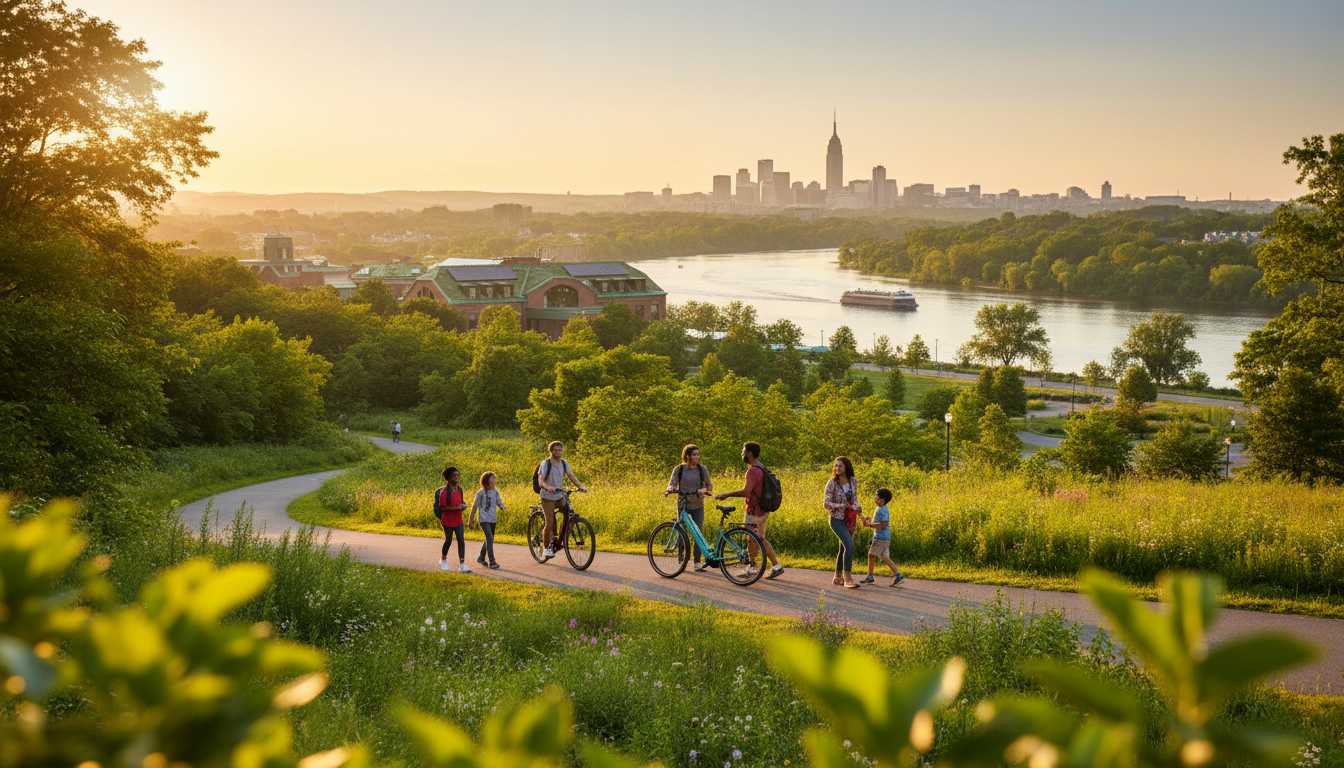
Green Albany starts with how you get around
CDTA — the Capital District Transportation Authority — runs the region’s buses and has been rolling battery-electric buses into its fleet alongside its BusPlus bus-rapid-transit lines. The Red Line (Route 905) runs Wolf Road to downtown State Street about every 15 minutes on weekdays for $1.50, and the #737 Northway Xpress connects Albany International Airport to downtown for the same $1.50 — versus a $22-$28 rideshare. Landing at ALB and taking the 737 instead of a cab is the single biggest carbon cut most visitors can make on arrival. Downtown itself is walkable end to end in about 15 minutes, so a car sits unused for most of a city-focused trip.
If you drive an EV, the region is well covered: Albany International Airport’s parking garage has charging, Empire State Plaza and several Wolf Road and Washington Avenue Extension hotels carry Level 2 ports, and Tesla Superchargers sit off I-87 and I-90 near Latham and Crossgates. Plan to top up overnight at the hotel rather than mid-day — Level 2 adds roughly 25 miles of range an hour, enough for a 10pm-to-7am charge to cover any Capital Region day trip. For a genuinely low-carbon trip, base yourself downtown, walk to the Capitol, the State Museum and Center Square dining, and keep the car parked.
Arrive by rail, then bike the Hudson
The lowest-carbon way to reach Albany from downstate is the train, and the region has a serious station for it. Albany-Rensselaer (station code ALB), across the Hudson in Rensselaer, is the busiest Amtrak stop in New York outside Penn Station and one of the ten busiest in the country. Empire Service and Adirondack trains run roughly a dozen times a day; the trip from New York Penn takes about 2 hours 30 minutes, versus 2.5-3 hours driving 150 miles up the Thruway. A seat on that train emits a small fraction of one person driving alone. Book Empire Service two to three weeks out and one-way fares sit near $30-45, against $60-plus for a walk-up ticket the morning of.
The station is not downtown, but bridging the gap is cheap and low-carbon: CDTA’s Route 214 crosses the Dunn Memorial Bridge into downtown Albany for $1.50, or a rideshare covers the mile-and-a-half in under ten minutes. Once you are in the city you rarely need a car again. If you want to actually see the Hudson under your own power, pick up the Mohawk-Hudson Bike-Hikeway, a paved, car-free rail-trail that runs about 41 miles from Albany’s Corning Riverfront Preserve north through Watervliet and Cohoes and then west along the Mohawk toward Schenectady and Rotterdam. It is flat, well-marked and free.
The honest call: for a city-only trip, take the train, skip the rental entirely, and use the 214 bus or a single short rideshare to reach your hotel. Rent a car only if the Adirondacks, Saratoga or the Berkshires are on your list, and pick it up on the day you actually leave the city rather than paying for it to sit in a downtown garage. A half-day on the bike-hikeway from the Corning Preserve — north to the Cohoes falls overlook and back is roughly 20 flat miles — replaces the kind of scenic drive most visitors default to, at zero fuel and zero emissions.
Explore the city car-free: Lark Street, the Plaza and bike-share
Once you are downtown, Albany is small enough that a car is a liability, not a help. The Empire State Plaza — the marble government complex with the egg-shaped performing-arts hall — links to the Capitol and the State Museum by a climate-controlled underground concourse, so you can cover the state's core sights in one walk without crossing a street. Ride the elevator to the Corning Tower observation deck on the 42nd floor; it is free, and on a clear day you can see the Catskills to the south and the Adirondack foothills to the north. From the Plaza it is a flat ten-minute walk west into Center Square to Lark Street, Albany's densest run of independent restaurants, bars and coffee shops.
Lark Street — roughly the six blocks between Washington Avenue and Madison Avenue — is where a car-free evening actually pays off: you can eat, drink and walk back to a downtown hotel without ever touching a rideshare. It sits directly against Washington Park, so a morning loop of the park's 90 acres and lake flows straight into brunch on Lark. For longer hops there is CDPHP Cycle!, the Capital Region bike-share run by CDTA, with docking stations around downtown, Lark Street, Washington Park and the university corridor. A day pass costs a few dollars and covers repeated 30-minute rides — enough to string downtown, the park and the Corning Riverfront Preserve together on two wheels.
The honest car-free day: walk the Plaza-to-Capitol concourse in the morning, grab a CDPHP Cycle! bike down to the Corning Riverfront Preserve for the Hudson views, ride back up to Washington Park, then finish on foot along Lark Street for dinner. None of it needs a car, none of it needs a rideshare beyond the ride in from the station, and the whole loop covers maybe four flat miles. Save the rental — if you book one at all — for the day you leave the city for Saratoga or the mountains, and pick it up that morning rather than paying for it to sit idle in a garage.
The Albany Pine Bush: a low-carbon half-day
The Albany Pine Bush Preserve is one of the largest inland pine barrens left on Earth — roughly 3,350 protected acres of sand dunes, pitch pine and scrub oak sitting between Albany and Schenectady. It is home to the endangered Karner blue butterfly, which flies in two broods, late May and again in July. More than 18 miles of marked trails are free to walk, and the Discovery Center on New Karner Road (free admission) explains the fire-dependent ecology that keeps the barrens alive. It is a 15-minute drive from downtown, or reachable on CDTA routes along Central and Washington Avenue Extension with a short walk to the trailheads.
It matters for a green itinerary because it is a real natural attraction that needs no long drive to the Adirondacks or Catskills, which sit 60-90 minutes away and burn most of a tank round trip. Pair a Pine Bush morning with an afternoon at Washington Park — 90 acres, Frederick Law Olmsted design lineage, free — and Albany’s best day outdoors costs almost nothing and emits almost nothing. Go early on summer weekends; the small trailhead lots on New Karner Road and Karner Road fill by mid-morning and there is no overflow parking. Wear closed shoes — the sand and scrub are the point, but they are rough on sandals.
More car-free nature: Five Rivers and the Hudson by kayak
Beyond the Pine Bush, the region’s other free nature anchor is the Five Rivers Environmental Education Center at 56 Game Farm Road in Delmar, run by the New York State Department of Environmental Conservation. Admission and parking are free, and roughly ten miles of easy, well-marked trails loop past ponds, meadows and woodland, with a staffed visitor center that explains the local ecology. It sits about six miles southwest of downtown Albany, a 15-minute drive, and pairs naturally with the Delmar Farmers Market on a Saturday. The trails are flat and stroller-friendly, so it works as a low-effort morning rather than a hike; arrive before 10am on summer weekends, when the modest lot fills first.
To see Albany from the water under your own power, the Corning Riverfront Preserve has a hand-launch for kayaks and canoes right downtown, and local paddlers put in there for flat-water trips on the Hudson. The river is tidal this far upstream, so time a paddle with the current rather than fighting it — a rising tide carries you north toward the Menands and Watervliet shoreline, an ebbing tide south past the Port of Albany. If you did not bring a boat, the flat Mohawk-Hudson Bike-Hikeway leaves from the same preserve and needs no equipment beyond a bike-share cycle. Either way the riverfront is a ten-minute walk from the downtown hotels, so no car enters the plan.
The honest ranking of Albany’s car-free green half-days: the Pine Bush first, for the rarity of a globally significant inland pine barrens 15 minutes out; Five Rivers second, for easy free trails and the Delmar market pairing; and a Hudson paddle or a Corning Preserve bike ride third, best saved for a warm, calm afternoon. All three cost little and emit almost nothing, and none demands the 60-to-90-minute drive to the Adirondacks or Catskills that most visitors default to. Reserve that longer mountain trip for a single dedicated day with a rental picked up that morning, and fill the rest of an eco itinerary with these three instead of burning fuel on scenery closer to home.
Eat low-carbon: the co-op, farmers markets and farm-to-table
The lowest-impact way to eat in Albany is to shop like a resident for part of the trip. Honest Weight Food Co-op at 100 Watervliet Avenue is a member-owned natural-foods store with a large bulk section — grains, nuts, coffee, oil and spices dispensed into your own containers — plus a deli and hot bar, about a ten-minute drive or a short CDTA ride west of downtown. For a stay in one of the Wolf Road or Clifton Park kitchenette hotels, a single co-op run replaces several delivery orders and all their packaging. Bring a reusable bag and a bottle; staff weigh your containers first, so you pay only for the food you actually fill them with.
On Saturdays the Troy Waterfront Farmers Market — 15 minutes north across the Hudson — is the region’s largest, running outdoors along River Street from spring through fall and moving indoors to the Uncle Sam Atrium for winter, which makes it a genuine year-round option. Expect Capital Region growers, cheesemakers and bakers rather than trucked-in produce, which is the entire point of a low-food-mile meal. Closer to base, the Delmar Farmers Market runs Saturdays year-round at the Bethlehem middle school, about 15 minutes south and a natural pairing with Five Rivers. Skip the Central Avenue supermarket for your snacks and picnic supplies; a market haul eaten in Washington Park is fresher, cheaper and lower-carbon than any chain café.
For a sit-down meal, Albany’s farm-to-table end concentrates around Lark Street and Delaware Avenue — kitchens that name their New York farms on the menu and change dishes with the season. That seasonality is the honest test of a low-carbon restaurant: a menu serving the same tomato salad in February is trucking it a long way. The decision for an eco-minded trip is simple: shop the co-op or a Saturday market for breakfasts and picnics, keep one or two farm-to-table dinners on Lark Street for the evenings you want to sit down, and skip the delivery apps entirely — the packaging plus an idling car is the least green way to eat in a city you can walk across in 15 minutes.
Sustainable stays in the Capital Region
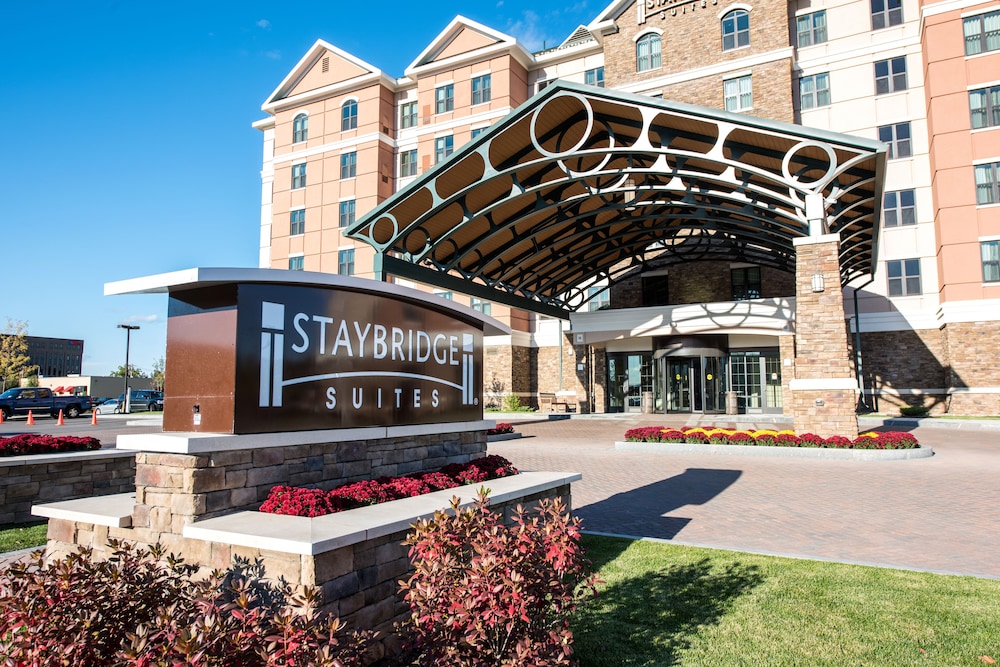
Sustainable stays in the Capital Region come down to two things: where the hotel sits, and what it runs on. A walkable downtown base — the Renaissance Albany on State Street, across from the Capitol, or the boutique 74 State — cuts driving to near zero for a city trip, which matters far more than a towel-reuse card. Rates downtown run $180-$421 a night depending on season and the event calendar. If you must drive, the Wolf Road and Clifton Park hotels increasingly carry EV charging and LED-retrofit efficiency; Homewood Suites and Staybridge Suites in that corridor run $150-$202 with full kitchens, so you cook rather than order delivery every night.
Skip the properties that market "green" on a laminated card while sitting on a strip that forces a car for every meal — a suburban hotel that saves one load of laundry but adds 20 miles of daily driving is a net loss. The honest ranking for a low-carbon stay: first, a downtown walkable hotel; second, a Wolf Road hotel on the BusPlus 905 line with EV charging; last, anything out in Bethlehem, Delmar or East Greenbush where transit is thin and every trip is a drive. Book the location that lets you leave the car still, and the rest of a green trip follows from there.
How IMPT climate-positive booking works
Every hotel booking made through IMPT removes one full metric ton — 1,000 kg — of CO₂ from the atmosphere through direct air capture, at zero extra cost to you and with a best-price guarantee on the room. That is the core of IMPT eco hotel booking: you pay the same rate you would pay anywhere, or less if the guarantee kicks in, and the booking funds permanent carbon removal on top. Direct air capture pulls CO₂ straight out of ambient air and stores it, rather than paying someone not to cut down a tree they may have cut down anyway.
Three things make this different from a typical "carbon-neutral" badge. First, it is removal, not avoidance — the CO₂ is physically captured and stored, not netted against a projected future. Second, it costs the traveller nothing extra and the room still carries a best-price guarantee, so choosing carbon-positive hotels in Albany never means paying a green premium. Third, the volume is deliberately oversized: one metric ton is roughly thirty times the carbon of a typical hotel night, so a two- or three-night Albany stay ends up net-negative on lodging by a wide margin, not merely balanced out to zero.
No greenwashing: what this does and doesn’t claim
Transparency matters more than a leaf logo, so here is the arithmetic. A single hotel room-night in the US emits on the order of 30-40 kg of CO₂ — heating, cooling, laundry, and the building’s share of grid power. A round-trip drive from New York City to Albany adds roughly 80-100 kg; a domestic flight, far more. Removing 1,000 kg per booking therefore covers a typical Albany stay’s lodging emissions about thirty times over, which is exactly where the "carbon-positive" claim comes from — the booking removes far more than the room emits, at least on the lodging side of the ledger.
What it does not claim: it does not erase your flight, and it is not a licence to fly farther because "the hotel handled it." It is also not a cheap avoidance offset dressed up in green — direct air capture is among the more expensive and more permanent forms of carbon removal, which is the whole point. If you want the lowest-footprint Albany trip, still take the train or the 737 bus, still base downtown and walk, still visit the Pine Bush instead of driving two hours for scenery. Then book through IMPT so the room you sleep in removes far more carbon than it costs. Use the hotel search on this page — Search Carbon-Positive Albany Hotels — to see live rates with the removal already built in.
The hotels in this guide


Questions, answered
Is green travel in Albany, NY actually practical without a car?
Yes for a city-focused trip. Fly or train into Albany, take the CDTA 737 bus downtown for $1.50, and walk to the Capitol, the State Museum, Center Square dining and Washington Park. You only need a car for day trips to Saratoga, the Berkshires or the Adirondacks.
What makes a hotel a "carbon-positive hotel" in Albany?
Here it means a real, bookable Albany-area hotel booked through IMPT, where the booking funds one metric ton of direct-air-capture carbon removal — roughly thirty times a night’s lodging emissions. The building itself may or may not be LED-retrofit; the carbon-positive part comes from the removal attached to the booking, not a badge on the door.
Does IMPT eco hotel booking cost more than booking direct?
No. IMPT carries a best-price guarantee on the room, so you pay the standard rate or less, and the one-ton carbon removal is funded on top at no extra cost to you. There is no green surcharge added at checkout.
What is the greenest way to get to Albany from New York City?
The train. Amtrak’s Empire Service runs from New York Penn Station to Albany-Rensselaer in about 2 hours 30 minutes, a dozen or so times a day, and emits far less per passenger than driving alone or flying. Book two to three weeks ahead for one-way fares around $30-45, then take the $1.50 CDTA 214 bus into downtown.
Can I see the Albany Pine Bush without driving?
It is easiest by car — about 15 minutes from downtown — but CDTA routes run along Central Avenue and Washington Avenue Extension within walking distance of the New Karner Road trailheads. Check the schedule, since frequency thins on weekends. The Discovery Center and more than 18 miles of trails are free.
Is direct air capture better than a normal carbon offset?
It is more permanent and more expensive. A typical offset pays to avoid future emissions — protecting a forest, for example — which can be reversed. Direct air capture physically pulls CO₂ out of the air and stores it, so the removal is measurable and durable. That permanence is why IMPT uses it for sustainable stays in the Capital Region.
How do I get around Albany without a car once I'm downtown?
On foot and by bike. The Empire State Plaza, Capitol and State Museum connect by a climate-controlled underground concourse, Lark Street and Washington Park are a ten-minute walk from the downtown hotels, and CDPHP Cycle! bike-share stations sit around downtown and the park. A day pass covers repeated 30-minute rides between the riverfront, the park and Center Square.
Where can I buy low-waste groceries and local food in Albany?
Honest Weight Food Co-op on Watervliet Avenue has a large bulk section where you fill and weigh your own containers, plus a deli and hot bar. On Saturdays the Troy Waterfront Farmers Market — the region’s largest and year-round — and the Delmar Farmers Market sell Capital Region produce, cheese and bread within about 15 minutes of downtown, cutting both packaging and food miles.
What free nature spots near Albany can I reach without a long drive?
Three stand out. The Albany Pine Bush Preserve, 15 minutes out, protects a rare inland pine barrens with 18-plus miles of trails. Five Rivers Environmental Education Center in Delmar, also about 15 minutes, has roughly ten miles of easy free trails and a visitor center. Downtown, the Corning Riverfront Preserve offers Hudson views, a kayak hand-launch and the bike-hikeway — all free.
Doing good is the business: every booking through Albany Eco funds one verified tonne of carbon removal — same room, same price, no markup.
Start Your Search