Day 1: The park itself, then the museum
Start at the park's main entrance at Willet and State streets, where the 1901 McKim, Mead & White gateway opens onto 81 acres of Olmsted-designed landscape. The 5.2-mile perimeter loop takes about 1 hour 45 minutes at walking pace; the paved interior paths are gentler and flatter. Spring bulbs peak in early May, and the Washington Park Tulip Festival draws crowds across the first weekend of that month. Come early — parking along Willett fills by 10am. The King Fountain and the Moses statue are the two landmarks most people photograph, and both sit within 10 minutes of the State Street gate.
Cross to 125 Washington Avenue for the Albany Institute of History & Art, open Wednesday to Sunday; adult admission sits in the low teens of dollars and the Hudson River School paintings alone justify two hours. Afternoon: the New York State Museum on Madison Avenue, free to enter, closed Mondays. Its fourth-floor Cohoes mastodon and the 9/11 gallery are the strongest rooms. Dinner options cluster on Lark Street, a seven-minute walk west — El Loco and the Wine Bar are neighbourhood fixtures. Book an Albany hotel within a half-mile of the park so you can walk home rather than hunt for parking twice a day.
Day 2: Center Square, Lark Street and the Empire State Plaza
Center Square, the historic district wrapped around the park's south and east edges, is the best-preserved 19th-century streetscape in the city — brownstones along Willett, Sprague Place and Elk Street, many with original ironwork. Walk down State Street to the Cathedral of the Immaculate Conception, then cut south to Lark Street for coffee. The Lark Street business district runs roughly from Madison Avenue to Washington Avenue and is where most of the neighbourhood's independent shops and casual restaurants sit. Allow a slow morning; nothing here opens much before 8am.
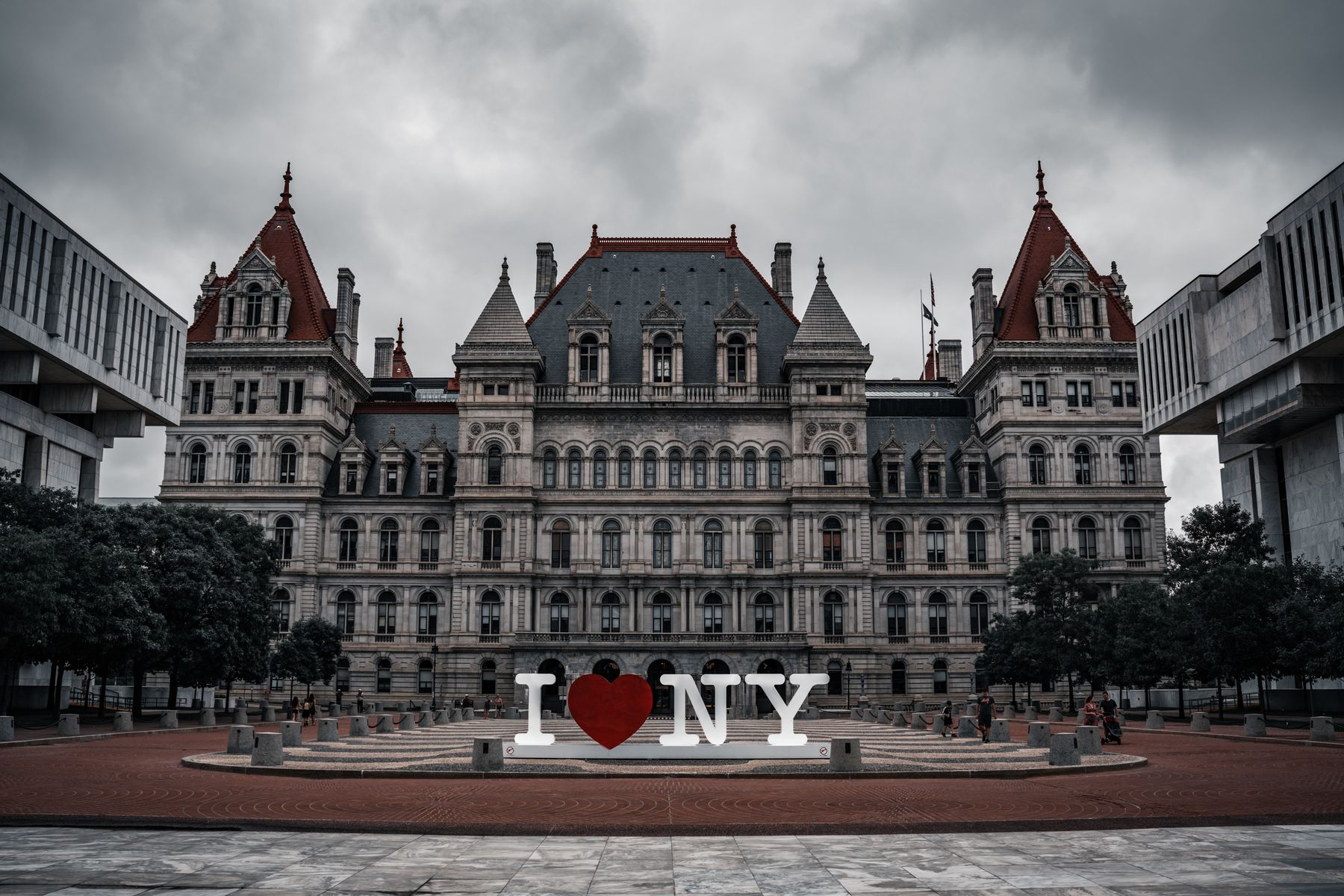
The afternoon belongs to the Empire State Plaza, a 20-minute walk south down Swan Street. The observation deck on the 42nd floor of the Corning Tower is open weekdays, free, and gives the clearest view of the Hudson Valley and the Helderbergs beyond. Below, the Plaza's art collection — including pieces by Calder and Nevelson — is worth 45 minutes. Skip the underground concourse restaurants unless the weather is bad; instead walk back via Madison Avenue, where the Delaware Avenue and Park South pockets have denser, better food. The 10 and 12 CDTA buses along Washington Avenue run every 15 to 20 minutes back toward the park.
Day 3: The Hudson, the Pine Hills, and when to come
Morning: drive or take a rideshare 10 minutes east to the Corning Riverfront Preserve, where the Albany County Helderberg-Hudson Rail Trail begins and runs 9 miles south toward Voorheesville. Even a two-mile out-and-back along the river gives you the skyline from the water. In summer, the USS Slater, a restored WWII destroyer moored at Quay Street, opens for tours Wednesday to Sunday; check seasonal hours before setting out. Back west, the Pine Hills neighbourhood around Saint Rose and Western Avenue is quieter than Center Square, with larger Victorian houses and easier on-street parking.
Best months for a Washington Park stay are late April through June, and again in September and October for foliage along the park's elm allée. July and August are humid and the park hosts free evening concerts; January and February are quiet, cold, and hotel rates fall noticeably. Two cautions: the park after dark is best avoided on foot outside the well-lit perimeter paths, and the Tulip Festival weekend books out accommodation across the city — reserve six to eight weeks earlier than you otherwise would. A hotel on Washington Avenue or Western Avenue puts you within a 10-to-15-minute walk of nearly everything above.
Questions, answered
Do I need a car for a Washington Park itinerary?
For the park, Center Square, Lark Street and the Empire State Plaza you can walk or use CDTA buses. A car helps for the Corning Riverfront Preserve, the Pine Hills and day trips to Saratoga or the Helderbergs; otherwise rideshares are simple and parking near the park is tight on weekdays.
Where should I stay near Washington Park?
Washington Avenue and Western Avenue give the easiest walk to the park and Lark Street. Center Square suits travellers who want restaurants on foot. Downtown near the Empire State Plaza is quieter on weekends but about a 25-minute walk from the park's main gates.
How long does it take to walk around Washington Park?
The full perimeter is about 5.2 miles and takes roughly 1 hour 45 minutes at a relaxed pace. The interior paths are shorter and flatter, and a loop past the King Fountain, the Moses statue and the lake takes around 40 minutes.
Doing good is the business: every booking through Albany Eco funds one verified tonne of carbon removal — same room, same price, no markup.
Start Your Search