How to Plan a Lower-Carbon Albany Trip (Without Greenwashing Your Hotel Stay)
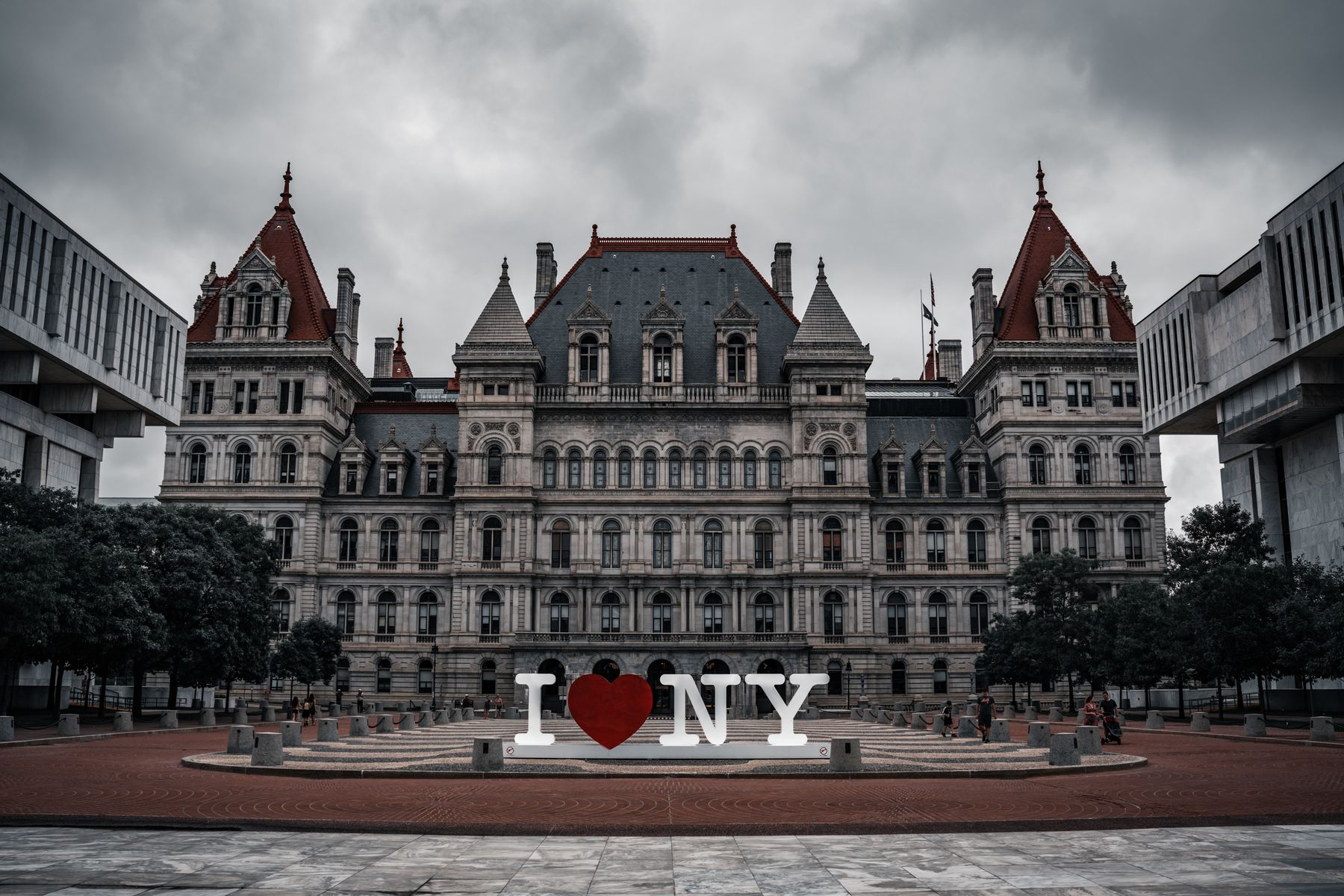 A downtown Albany, NY street scene with the Empire State Plaza and a CDTA bus on a lower-carbon city trip
You can't fly to Albany and erase the emissions, but you can choose a downtown hotel, take the bus from the airport, and put your money into the parts of the trip that actually cut carbon.
Getting to Albany: Flights vs. Train vs. Bus
Albany International Airport (ALB) sits about 6 miles north of downtown in Colonie, and it's small enough that you're through baggage claim in 15 minutes. Nonstops from the New York City area are short — roughly 50 minutes from LaGuardia or Newark on a regional jet — but that short hop carries a disproportionate emissions load per passenger because takeoff burns most of the fuel. If you're coming from Manhattan, the smarter move is Amtrak's Empire Service from Penn Station to Rensselaer (ALB rail station), about 2 hours 30 minutes, then a 10-minute taxi or the CDTA Route 233 bus into downtown. From Boston, the drive is about 2 hours 45 minutes on the Mass Pike and I-90.
If you do fly, book a nonstop rather than a connecting itinerary through Detroit or Charlotte — connections can double the fuel burn per passenger. Airlines' own offset add-ons at checkout typically run $5–$15 for a short domestic hop, and that money goes to verified projects; it's fine, but it isn't the lever that matters. The bigger lever is frequency: one round trip instead of three. And if you're renting a car at ALB, note that parking downtown at your hotel will often cost $15–$25 a night, so weigh that against relying on CDTA buses (Route 1 and Route 10 serve the airport corridor) and walking the Center Square and Washington Park grid.
Where to Stay So You Can Walk and Bus
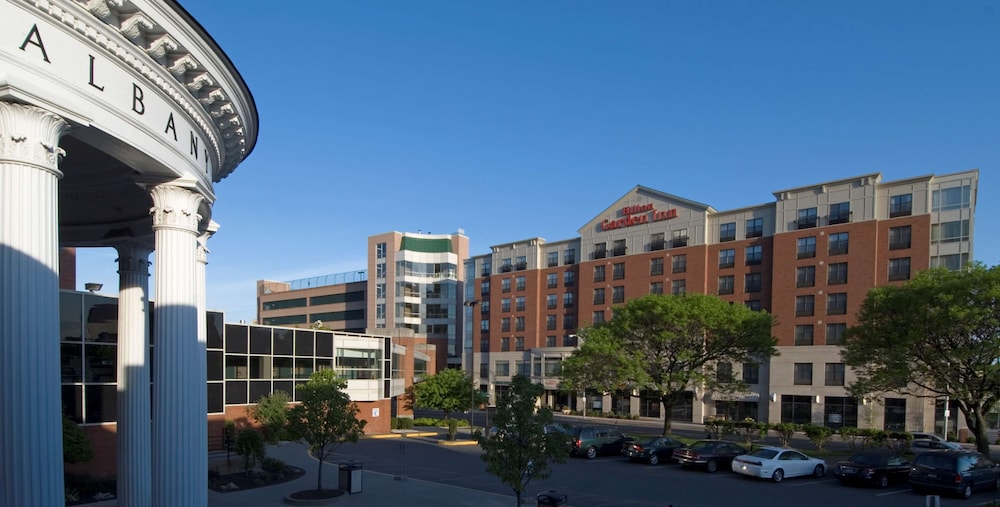
The single biggest carbon decision after your transport mode is location. Book downtown, roughly between State Street, Broadway, and the Empire State Plaza, or in the Lark Street / Center Square area just south and west of Washington Park. From there you can walk to the New York State Museum, the Capitol, and the Times Union Center without touching a car. The Hilton Albany on Lodge Street and the Hampton Inn on Chapel Street sit right on that grid. Rates in Albany are moderate by Northeast standards — expect roughly $130–$220 midweek and $110–$180 on weekends, with the priciest nights during state legislative session (January–June) and graduation weekends in May.
What I would skip: the cluster of airport-adjacent hotels on Wolf Road in Colonie. They're cheaper per night and convenient if you have a 6 a.m. departure, but every dinner, museum visit, and Lark Street coffee run becomes a 15-minute drive each way, and CDTA service on that corridor is infrequent in the evening. Also skip the big box properties out on Washington Avenue Extension unless you're visiting UAlbany specifically. If you're here for the tulips, book the first or second weekend of May; if you want the foliage and the Saratoga day trip, aim for the last week of September through the second week of October.
What 'Carbon Offset Package' Actually Means Here
Most booking sites will show you a bundle with a green leaf icon and a few dollars added to the room rate. That money usually goes to a third-party offset registry funding projects like landfill methane capture or cookstove distribution — legitimate but hard to verify at the room-booking level. A more honest approach: book the hotel directly, then spend the offset amount on things that reduce the trip's actual footprint, like a CDTA Navigator day pass (roughly $4) instead of two taxi rides, or choosing the train over the flight and pocketing the difference. Your hotel choice itself is a real offset: a downtown property with an existing building and walkable surroundings emits far less per night than a new-build suburban property that assumes every guest drives.
Ask the front desk two concrete questions: do they participate in a linen and towel reuse program, and do they have recycling in guest rooms rather than just the lobby. Many Albany properties do; a few don't. Neither answer will make or break your trip, but it tells you whether the green messaging on the booking page is real. If you're combining Albany with a Hudson Valley or Berkshires leg, the train to Rensselaer and a rental car picked up downtown beats flying into ALB and driving the whole loop.
Day Trips You Can Reach Without a Car
A big share of an Albany trip's carbon comes from day-tripping by car, and several of the best ones don't need one. Amtrak's Empire and Adirondack trains run north from Rensselaer to Saratoga Springs in about 40 minutes; the station sits roughly a mile from Broadway, an easy walk or a short cab to Congress Park, the Saratoga Farmers' Market and the spa-town restaurants. South down the Hudson, the same line reaches the city of Hudson in about 35 to 40 minutes, dropping you two blocks from Warren Street's mile of antique shops and cafés — a genuinely car-free afternoon.
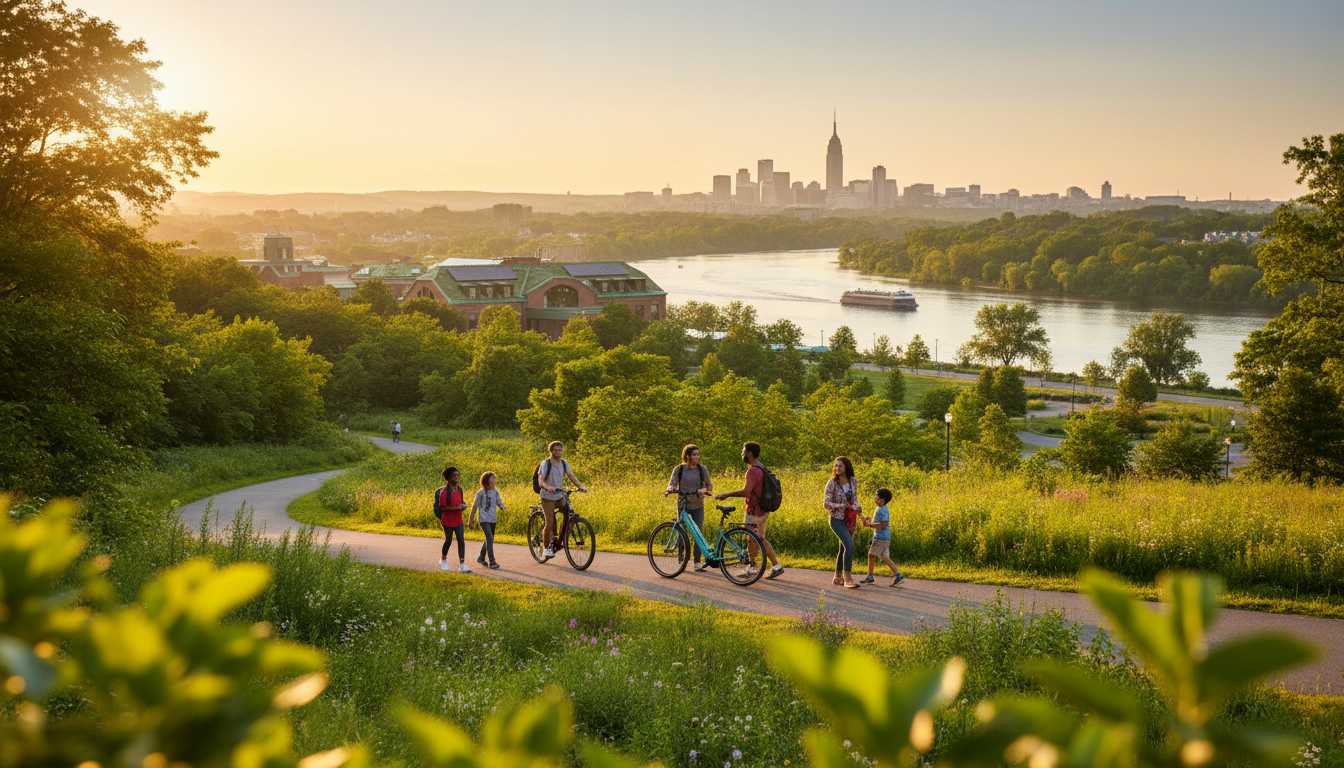
Closer in, skip the car entirely. Troy is 20 to 30 minutes from downtown Albany on CDTA Route 22 or 224 for the price of a day pass, and its riverfront core, the Saturday Troy Waterfront Farmers' Market and the Emma Willard campus are all walkable once you arrive. For a green hour on foot from a downtown hotel, the Corning Preserve on the Mohawk-Hudson Bike-Hike Trail runs right along the river below the Plaza. Save the rental for one focused day in the Helderbergs — Thacher State Park's Indian Ladder Trail, about 40 minutes southwest, open roughly April to November — and return it the same evening.
Eating and Drinking Within Walking Distance
The payoff of a downtown base is that dinner never needs a car. Lark Street, the spine of Center Square, packs independent kitchens into four walkable blocks: expect $12–$18 for lunch at a café and $20–$35 for a mains-and-a-drink dinner, well below Manhattan money. State Street anchors the old-school end, where Jack's Oyster House has served since 1913 and sits a five-minute walk from the State Street hotels. For coffee and a pastry under $8, the cafés around Lark and Madison open early enough for a pre-museum start.
Keep the walkable radius honest when you plan. From a hotel between State Street and the Empire State Plaza you can reach the New York State Museum, the Capitol steps, Washington Park and most of Lark Street in under 15 minutes on foot, which means a two- or three-day trip can run without a single rideshare. Refill a bottle at the Plaza's concourse fountains rather than buying water in the room, carry the CDTA Navigator pass for the one rainy evening you don't want to walk, and you've cut both the cost and the carbon of the local legwork to almost nothing.
Before you book
What people ask before booking Albany.
From New York City, Amtrak's Empire Service to Rensselaer is about 2h30m and emits far less per passenger than the 50-minute flight. From Boston or Montreal, the train is longer but still lower-carbon than flying. Fly only if the train doesn't fit your schedule.
Downtown around State Street, Broadway, and the Empire State Plaza, plus Center Square and Lark Street near Washington Park. From there you can walk to the Capitol, State Museum, and most restaurants. CDTA buses cover the airport corridor if you need it.
They fund real projects but are hard to verify and usually small. A more effective use of the same money is a CDTA day pass, choosing a walkable downtown hotel, and taking one trip instead of several. Treat the checkbox as a nudge, not the solution.
Yes. Amtrak reaches Saratoga Springs in about 40 minutes and Hudson in about 35, both walkable on arrival, and CDTA buses run to Troy in 20 to 30 minutes. Keep a rental to a single day for the Helderbergs and Thacher State Park's Indian Ladder Trail.
Late September through mid-October pairs foliage with a walkable downtown and a car-free Saratoga day trip, and early-to-mid May catches the Tulip Festival in Washington Park. Both let you lean on trains, buses and your own feet rather than a rental car for most of the trip.